Start here
Elephanta: worth the trip?
Are the Elephanta Caves worth it from Mumbai? What you see, the ferry and the climb, the Monday closure, the monsoon, and whether a guide helps.
See Elephanta dates ↗Quick answer
Yes, if you want to see a UNESCO-listed set of rock-cut Hindu temples and you are happy to give most of a morning or afternoon to a ferry, about 120 steps and a long walk. The Great Cave's three-headed Shiva is the reason to go. It is not a beach trip, the caves are closed on Mondays, and in the June to September monsoon ferries can be delayed or cancelled.
The short answer
The Elephanta Caves earn the half-day if rock-cut sculpture interests you at all. They sit on an island in Mumbai Harbour, and the Great Cave holds a three-faced Shiva and a series of carved panels cut straight out of basalt. The Archaeological Survey of India dates the seven caves to roughly the 6th and 7th centuries. The cost is time: a ferry each way, a climb and a walk in the heat. If you have one day in Mumbai, weigh the trip against the city itself. If you have two, it is a strong use of one of them.
- Go for the carving, not for a beach
- Plan around Mondays and the monsoon
- Wear shoes that grip stone steps
What you actually see
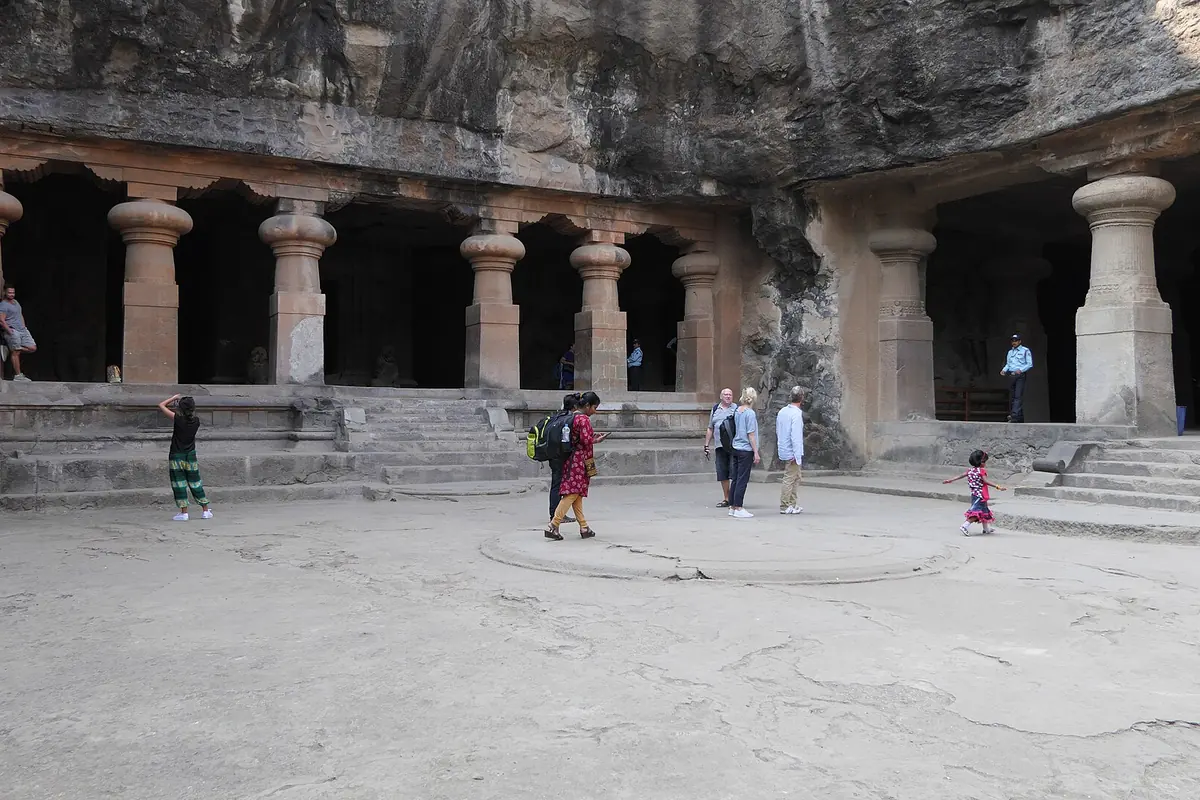
The main cave is a pillared hall about 39 metres from the entrance to the back wall, according to Wikipedia, entered from the north with side openings to east and west. Inside, the walls carry large relief panels: the three-faced Shiva on the south wall, Shiva and Parvati joined as one figure, Shiva bringing the Ganges to earth, and a wedding scene. At the western end a square shrine holds a linga. Four entrance pillars and rows of six pillars divide the hall, Wikipedia says. Four more Hindu caves sit nearby, and two Buddhist caves lie on the eastern hill.
The island and the crossing
Elephanta Island, also called Gharapuri, lies in Mumbai Harbour, east of the Gateway of India, and Wikipedia says Gharapuri means the city of the caves. Boats for tourists leave from the jetties beside the Gateway of India, an arch completed in 1924. On a guided half-day tour the ferry takes about an hour each way, so the crossing is a real part of the day rather than a formality. Wikipedia describes the island as about 2.4 km long with two hills, lying less than 2 km from Jawaharlal Nehru Port. You see the harbour and the city skyline from the water, and you arrive on a green island hill.
The climb
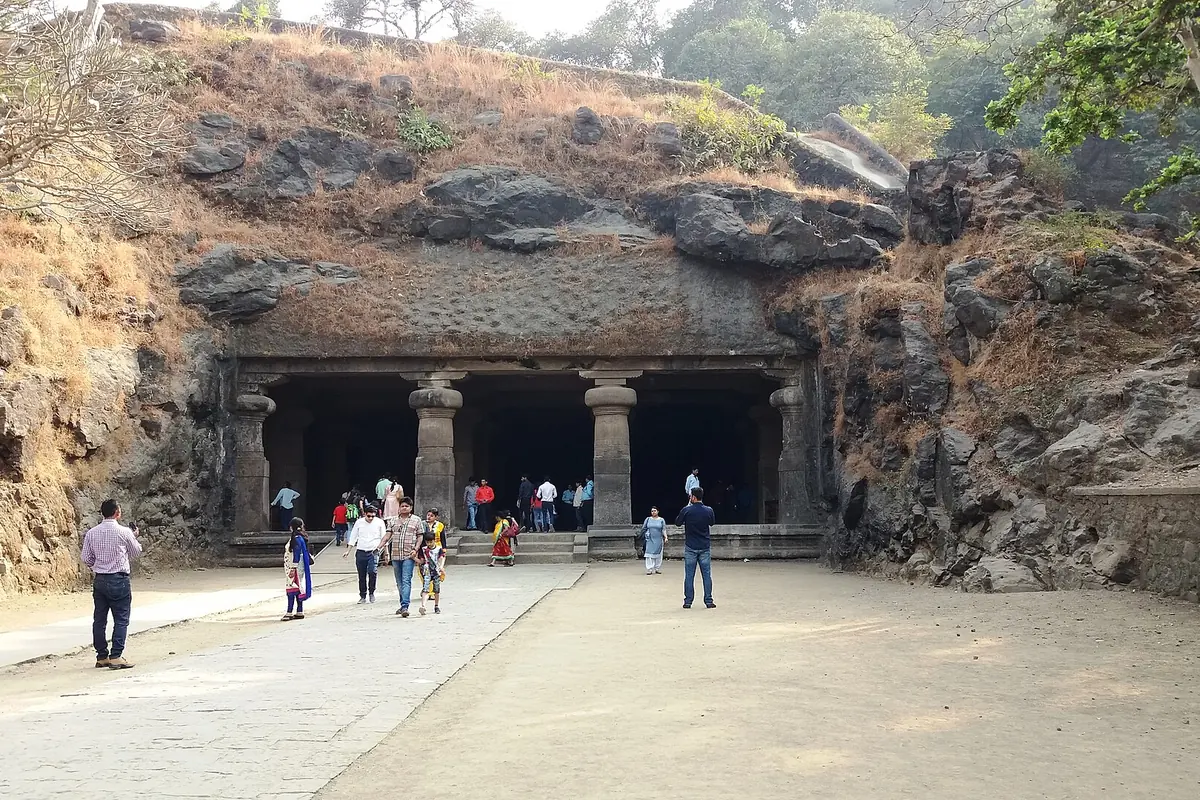
A visitor must climb about 120 steep steps from the ticket counter to reach the Great Cave, and the same steps lead back down. Comfortable shoes, sunglasses and a hat are what the tour asks you to bring, which tells you what the walk is like in the sun. The tour is not suitable for people with back problems or mobility impairments. If stairs are a problem for you, read the practical guide on getting to Elephanta before you book, because the climb cannot be skipped.
Read next: Getting to Elephanta
Mondays and the monsoon
The Archaeological Survey of India lists the caves as closed on Mondays, so look at the weekday before you choose a date. The second limit is weather. During the monsoon, from June to September, ferries may be delayed or cancelled by heavy rain, strong winds and high tides. Full refunds are offered if a tour is cancelled, but delays are possible. In those months, do not plan a tight evening after the trip, and expect the sea, not the caves, to decide the day.
Is a guided tour worth it?
The carvings are scenes from Shiva stories, and a visitor with no background sees large grey figures in dim light. A guide names the panels, explains who is who and points out what Portuguese-era damage took away. The tour bundles the guide with the ferry and, on some options, the monument entry and a skip-the-line pass. Going alone is possible, since the ferry and the monument are open to anyone, but you read the signs and your own notes instead. The guide-or-alone comparison sets the two next to each other.
Read next: Guide or go alone?
How long it takes
Plan on a half-day. The itinerary has an hour on the ferry each way and about an hour and a half at the caves, with the meeting point and the drop-off depending on the option you pick. Pick-up is offered on some options, so check the booking calendar rather than assuming it. Add time for the walk up and down, and for getting to the departure point in south Mumbai. Treat the whole trip as most of a morning or an afternoon, not a two-hour excursion between meetings.
What to take with you
Bring comfortable shoes, sunglasses and a hat, which are the three items the tour asks for, plus water and your booking confirmation. Large bags and luggage cannot come on the tour, so leave anything bulky at your hotel. Stone steps and open courtyards can be hot, and there is a gap between the shade of the caves and the sun outside them. Wear clothes you can climb in. The caves began as Hindu temples and are protected today, so treat them as a place of worship and a monument rather than a film set.
What the caves are not
They are not intact. Wikipedia reports that the island passed to the Portuguese in 1534, that Cave 6 was turned into a church, and that accounts differ on how the carvings were damaged, with some pointing to Portuguese soldiers using the caves as a firing range. Many panels are worn or have lost figures. They are also not a museum with a label beside every sculpture. They are a monument cut from living rock, repaired in modern times, where the loss is part of what you see.
Who this isn't for
It is the wrong trip if you cannot manage 120 steep steps, if you have a bad back, or if a ferry delay would wreck your plans. Skip it too if you have only a few hours free, or if you mainly want views and a beach, since the island offers a hill walk and caves instead. A traveller who has little interest in sculpture and religious art may find the carvings hard to read even with a guide. In that case a walk through the older streets of south Mumbai may suit you better. If caves interest you but the island does not, the Kanheri comparison covers the alternative.
Read next: Elephanta or Kanheri caves?
Booking
Open the calendar and each date lists its options, with the meeting point set by the option. Payment can follow the reservation, and a change of plan more than a day before the start costs nothing. If the monsoon cancels a ferry, the tour is refunded in full. Carry your confirmation, a hat, sunglasses and sturdy shoes, and leave bulky bags at the hotel. Check that the day you pick is not a Monday.
- Choose a weekday that is not a Monday
- Check the meeting point for your option
- Pack water, a hat and light shoes
Frequently asked questions
Are the Elephanta Caves worth visiting from Mumbai?
Yes, if you like rock-cut sculpture and can manage the ferry and about 120 steps. The three-faced Shiva in the Great Cave is the main draw. Allow most of a morning or afternoon.
Are the Elephanta Caves closed on Mondays?
Yes. The Archaeological Survey of India lists the caves as closed on Mondays. Check the weekday before you choose a date.
Does the monsoon stop the ferries?
It can delay or cancel them. From June to September, heavy rain, strong winds and high tides may disrupt the crossing. Full refunds are offered if a tour is cancelled.
How long is the Elephanta tour?
A half-day. The ferry takes about an hour each way and the visit to the caves about an hour and a half. Meeting points and drop-offs depend on the option.
Is the climb hard?
It is steep. About 120 steps lead from the ticket counter to the Great Cave. It is not suitable for people with back problems or mobility impairments.
Is this site run by the caves or the tour operator?
No. Nothing here comes from the caves, the Archaeological Survey of India or a tour operator, and this guide has no affiliation with any of them. You book through GetYourGuide.
Sources