History
Elephanta's history
From Gharapuri to Elephanta: who carved the caves, how the island got its name, what the Portuguese era did to the sculpture and how the site was saved.
See Elephanta dates ↗Quick answer
The seven caves of Elephanta Island, once called Gharapuri, were carved in roughly the 6th and 7th centuries, and many scholars attribute the Hindu caves to the Kalachuri king Krishnaraja. The Portuguese took the island in 1534 and named it after an elephant statue. The caves were damaged, restored from 1909 and again in the late 1970s, and inscribed by UNESCO in 1987.
Gharapuri before Elephanta
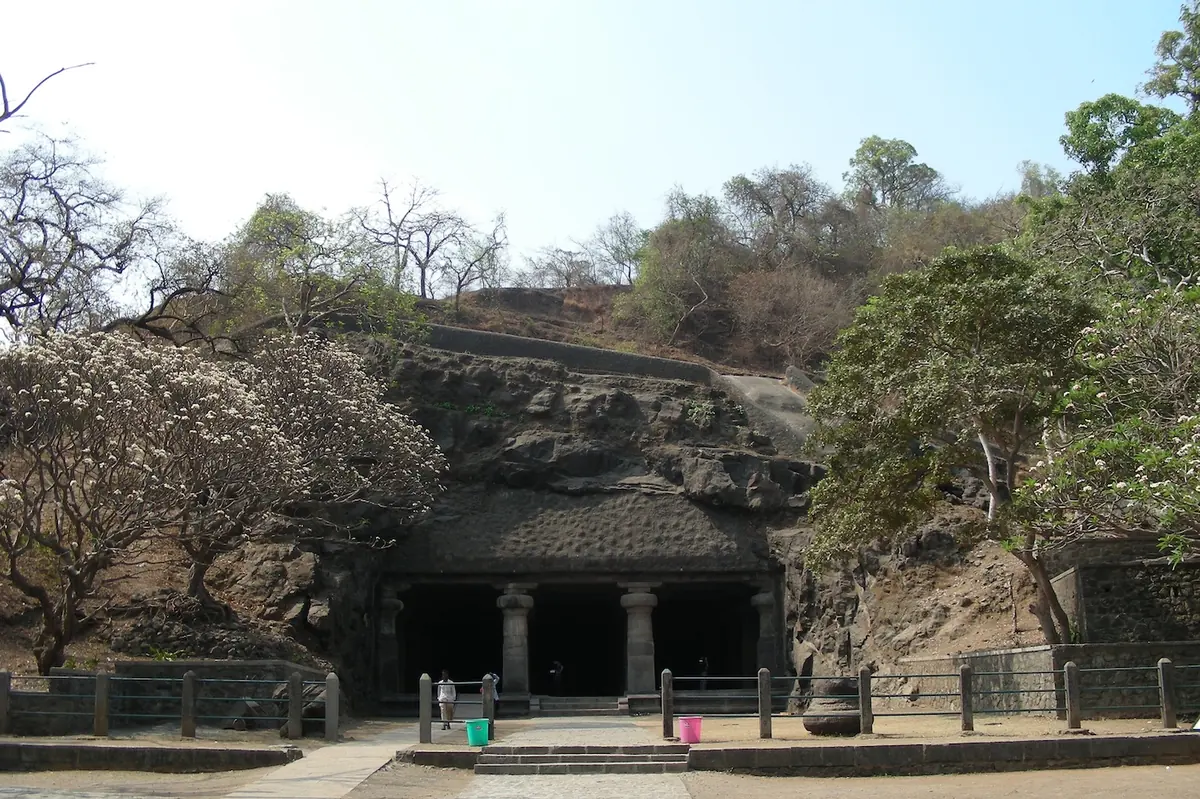
Before it was Elephanta, the island was Gharapuri, which Wikipedia says means the city of the caves. The Archaeological Survey of India notes that the ancient name Puri appears in the Aihole inscription of Pulakesin II, and lists the dynasties that held the island, from the Konkan Mauryas to the Muslim rulers of Ahmedabad, followed by the Portuguese, the Marathas and the British. The island is a small place with a long chain of rulers, and the caves are the monuments that survive from that long history.
Who carved the caves
The Archaeological Survey of India dates the seven cave excavations to roughly the 6th and 7th centuries. Wikipedia puts the broader range between the 5th and 9th centuries, with many scholars thinking the work was complete by about 550 CE, and attributes the temples to the Kalachuri king Krishnaraja. It describes an older theory linking them to the Rashtrakutas as discredited. The Hindu caves cluster on the western hill, and Buddhist stupa mounds on the eastern hill are older still, about the 2nd century BCE.
How the island got its name
The Portuguese named the island Elefante after an elephant statue they found there, and the name became Elephanta. Wikipedia reports that the Gujarat Sultanate ceded the island to the Portuguese in 1534, that Cave 6 was converted to a church, and that the island passed to the British in 1661. The elephant itself is no longer on the island.
What happened to the statue
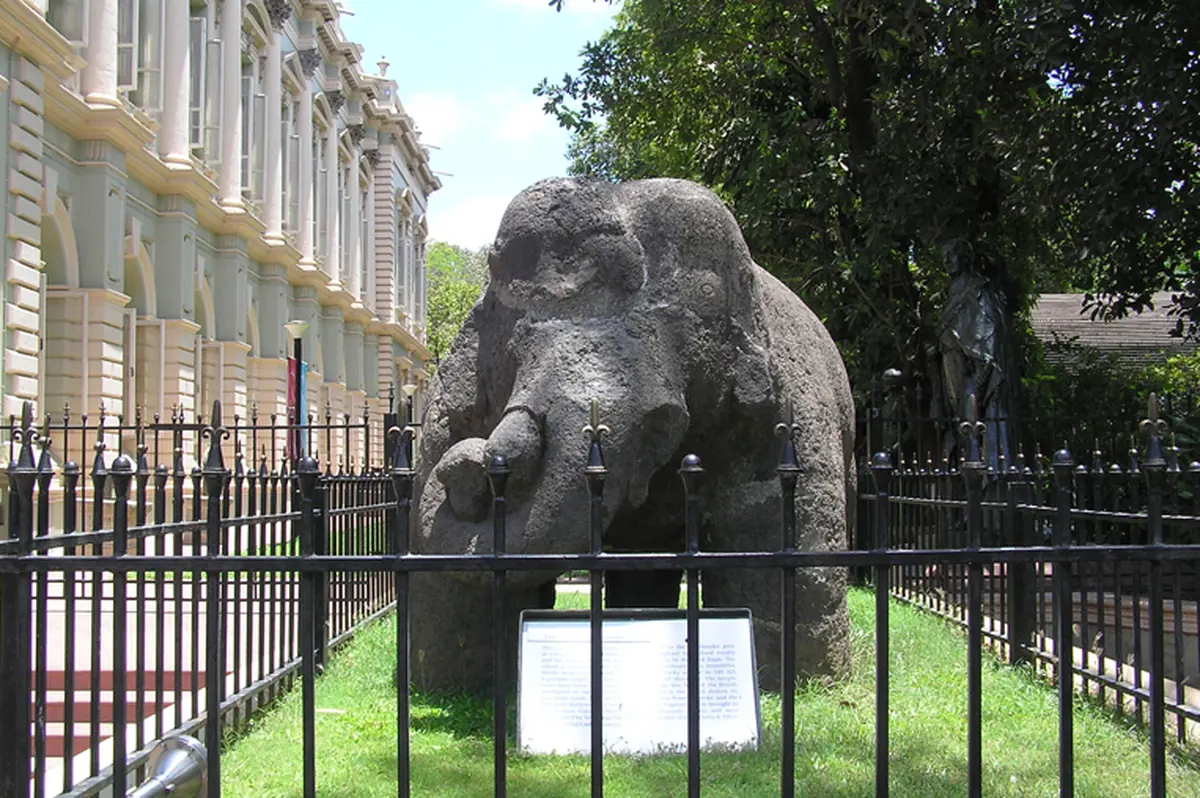
The stone elephant was harmed during an attempt to move it to England in 1864, according to Wikipedia. Its reassembled pieces now stand at Jijamata Udyaan, a garden in Mumbai, which the Archaeological Survey of India also names as the statue's home. The tale shows how the island's best-known object became separated from it. Visitors today come for the caves, not for the animal that gave the island its European name.
The damage to the caves
By the time the Portuguese ceded the island in 1661, Wikipedia says the caves had suffered considerable damage. It reports that accounts differ: one writer links the damage to desecration under the Sultanate and to the Portuguese authorities, while others point to Portuguese soldiers using the caves as a firing range. Because the sources disagree, the cautious statement is that the carvings were damaged during the centuries when the island changed hands, and not every figure can be blamed on one episode.
Saving the site
Wikipedia says the earliest preservation efforts came in 1909, when the caves were placed under the Indian Archaeological Department, and that the Government of India restored the main cave in the late 1970s and put back pillars in other caves. UNESCO inscribed Elephanta as a World Heritage Site in 1987. The Archaeological Survey of India now maintains and manages it. In 2023, Wikipedia reports, CyArk and partners recorded Cave 1 with 197 laser scans and more than 6,500 photographs.
Who this isn't for
Anyone hoping for one clear story of who damaged the caves will not find it here, because the sources disagree and this guide does not pick between them. If you want a firm chronology, the Archaeological Survey of India's dating to the 6th and 7th centuries is the safest anchor. If you want the sculpture itself, the Great Cave guide takes you through the panels instead.
Read next: The Great Cave's carvings
Frequently asked questions
What was Elephanta Island called before?
Gharapuri, which Wikipedia says means the city of the caves. The Portuguese gave it the name Elefante after an elephant statue.
Who carved the Elephanta Caves?
Many scholars attribute the Hindu caves to the Kalachuri king Krishnaraja. The Archaeological Survey of India dates the seven caves to roughly the 6th and 7th centuries.
When did UNESCO list the caves?
In 1987, when Elephanta was inscribed as a World Heritage Site.
Who damaged the sculptures?
Sources differ. Some point to desecration under the Sultanate and the Portuguese authorities; others say Portuguese soldiers used the caves as a firing range.
Where is the elephant statue now?
Its reassembled pieces stand at Jijamata Udyaan in Mumbai, after it was harmed in an attempt to move it to England in 1864.
Sources